UPC-A vs. UPC-E: Decoding the Evolution of the Retail Barcode
By Kaitlyn Lawrence on July 27, 2025
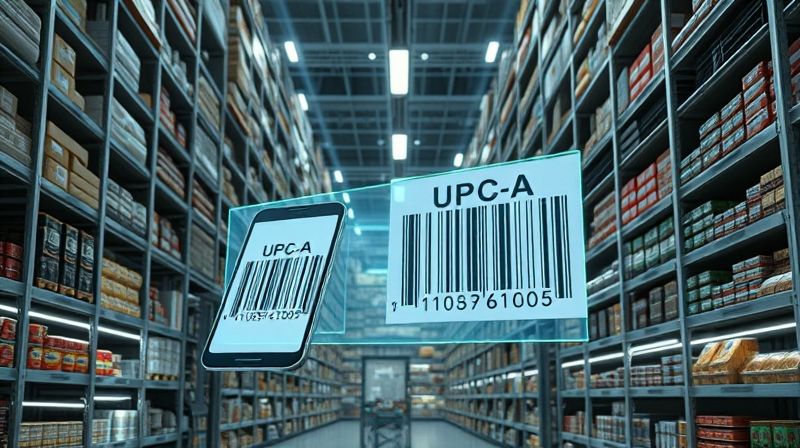
For decades, the ubiquitous barcode – specifically the Universal Product Code (UPC) – has been the backbone of retail inventory management and point-of-sale systems. But behind the seemingly simple black and white stripes lies a surprisingly complex system of encoding data. Understanding the difference between UPC-A and UPC-E is crucial for anyone involved in retail, supply chain management, or even simply curious about the technology shaping modern commerce. This article will delve into the nuances of these two barcode types, exploring their differences, historical context, and current relevance.
What is a UPC Code?
Before we dive into the variations, let’s briefly establish the foundation. The UPC (and its predecessor, the EAN – European Article Number) is a standardized barcode system used globally to identify products. It’s a 12-digit number representing a product, typically encoded using a linear barcode symbology. These codes are crucial for automating inventory tracking, speeding up checkout processes, and ultimately, improving efficiency across the supply chain.
UPC-A: The Original Standard
UPC-A was the original and most widely adopted version of the UPC barcode. Introduced in 1988, it uses all twelve digits of the barcode to encode information. The first six digits represent the manufacturer's code, the next two digits identify the brand, and the final four digits represent the product's specific item number. The encoding utilizes a very dense pattern, allowing for high data density. This density was vital for applications where space was limited, such as smaller product packaging or items with limited shelf space.
Why UPC-A Became Dominant
UPC-A’s widespread adoption was driven by several factors. Firstly, its dense encoding provided the most detailed product information in a compact format. Secondly, the initial cost of barcode scanners and software was lower, making it the preferred choice for many retailers and manufacturers. Finally, the established infrastructure built around UPC-A made it incredibly difficult for a new barcode type to gain significant traction.
UPC-E: A Response to Shrinking Spaces
In the early 2000s, the retail landscape began to shift. Companies increasingly focused on minimizing product packaging to reduce shipping costs and waste. As a result, space on product labels became a premium. This is where UPC-E emerged as a crucial evolution. UPC-E was created specifically to address this need.
How UPC-E Works
UPC-E utilizes only six digits of the UPC-A code. It achieves this by collapsing the lower digits of the UPC-A code. This allows for a significantly smaller barcode, reducing the physical space required on packaging. The key difference lies in the grouping of the digits – UPC-E essentially summarizes the information encoded in UPC-A, prioritizing efficiency over maximum data density. The first five digits remain the same as in a UPC-A code, and the sixth digit is a simplified identifier derived from the product’s item number.
Key Differences Summarized
- Size: UPC-E barcodes are roughly 30% smaller than UPC-A barcodes.
- Data Capacity: UPC-A encodes more data than UPC-E, though for most retail applications, the reduced size is more beneficial.
- Use Cases: UPC-E is predominantly used on smaller packaging items, such as single-serve products or items packed in smaller boxes.
The Current Landscape
Currently, both UPC-A and UPC-E barcodes are still widely used. However, the trend is gradually shifting towards UPC-E, particularly for smaller, more compact products. Some retailers and manufacturers are also starting to experiment with newer barcode technologies, such as DataMatrix and QR codes, which offer even greater data capacity and flexibility.
Conclusion
Understanding the distinction between UPC-A and UPC-E is paramount for anyone working in retail and related industries. While UPC-A remains prevalent, UPC-E’s evolution reflects the industry’s ongoing pursuit of efficiency and optimized packaging. The continued development and adoption of new barcode technologies promise to further streamline supply chains and enhance the retail experience.